
Indian benchmark equity indices, Sensex and Nifty, closed higher on Monday, driven by softer-than-expected US jobs data which reduced expectations of aggressive monetary tightening by the US Federal Reserve, boosting risk appetite across emerging markets.

The Indian women's cricket team is set to complete a 3-0 T20I series sweep against Zimbabwe in the final match in Raipur, buoyed by strong performances from captain Smriti Mandhana, Shafali Verma, and debutant Niki Prasad.
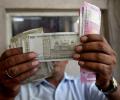
Government sources clarify that the 0.4% merchant discount rate (MDR) on UPI transactions above Rs 2,000, effective October 15, will not be passed on to consumers. The charge, paid by merchants, aims to create a sustainable revenue framework for the digital payments ecosystem, with funds shared among banks and UPI entities. Small merchants using QR codes for up to Rs 1 lakh monthly are exempt.

The Rajya Sabha has passed The Bankers' Books Evidence Bill, 2026, which aims to replace a British-era law and allow digital and virtual records to be admissible as evidence in courts. This legislation aligns with contemporary digital banking practices and extends a uniform evidential framework to various financial entities, including NBFCs and fintech companies. Finance Minister Nirmala Sitharaman highlighted the bill's role in strengthening public confidence and safeguarding customer privacy. The bill's passage, however, saw an Opposition walkout over unrelated issues.

P V Sindhu and Lakshya Sen faced early exits at the Denmark Open badminton tournament on Tuesday, while Kidambi Srikanth and Tanvi Sharma secured hard-fought victories to advance to the second round. Sindhu lost to Yvonne Li, and Sen was defeated by Chou Tien Chen. Srikanth will face Alex Lanier, and Tanvi Sharma will play Yvonne Li next.

Jio Platforms Ltd's (JPL) public offer, valued at Rs 30,213 crore, was fully subscribed within 100 minutes of opening, making it the fastest-ever subscribed IPO in India, driven by strong institutional demand.

Indian benchmark indices, Sensex and Nifty, closed marginally lower due to elevated crude oil prices, fresh US-Iran tensions, and expectations of a tighter monetary policy from the US Federal Reserve, despite strong domestic GDP growth.
The Reserve Bank of India on Wednesday raised its policy repo rate by 25 basis points to 5.50 per cent, beginning a rate-hike cycle as rising inflation risks, elevated global yields and resilient domestic growth strengthened the case for tighter monetary policy. The decision by the Monetary Policy Committee marks a shift from its August policy, when it kept the repo rate unchanged at 5.25 per cent and retained a neutral stance while seeking greater clarity on the inflation outlook and growth-inflation balance.

Indian stock markets closed lower due to selling in IT and FMCG shares, triggered by renewed tensions in West Asia which led to a rally in crude oil prices and concerns over inflation and interest rates.

Indian benchmark indices, Sensex and Nifty, surged over 1 per cent, recovering from two days of losses, driven by a strong rally in IT stocks, particularly TCS, and a moderation in global crude oil prices.

'It's not about individuals operating the mule accounts being more or less skilled. Instead, 'lower-level' refers to the role the individual account plays in the broader mule network.'

Indian benchmark equity indices extended their losing streak for a fourth consecutive day, with the Sensex tumbling 417 points due to rising crude oil prices and a significant sell-off in IT stocks, impacting overall investor sentiment.
Indian equity benchmark indices Sensex and Nifty experienced a significant tumble in early trade, primarily driven by elevated crude oil prices due to ongoing West Asia uncertainty and substantial foreign fund outflows. Track Sensex, Nifty on September 29.

After a significant 9.9% depreciation in FY26, the Indian rupee has shown comparative stability in the first half of FY27, depreciating by only 1.1%, attributed to regulatory interventions and measures to attract foreign capital, despite ongoing global pressures from rising crude oil prices and foreign investor outflows.

Jio Platforms' initial public offering has garnered an overwhelming institutional demand of approximately Rs 2.5 lakh crore, significantly exceeding its Rs 8,110-crore anchor book, with global and domestic investors vying for a stake in the Reliance Industries subsidiary.

'India was the emirate's largest international source market by hotel guest volume.'

Indian benchmark indices Sensex and Nifty experienced a significant downturn in early trade, with the Sensex tanking 730 points, driven by surging crude oil prices, escalating geopolitical uncertainties, and a weak trend observed across Asian markets.

India's T20 captain Shreyas Iyer stated that young batting talent Vaibhav Sooryavanshi cannot immediately join the playing XI due to the consistent performance of current openers Abhishek Sharma and Sanju Samson, who were instrumental in India's T20I World Cup win.

Emirates NBD Bank has successfully acquired a 60 per cent majority stake in RBL Bank through a primary capital infusion of approximately USD 2.75 billion, marking the largest foreign direct investment in India's banking sector.

Akash Ambani is leading Jio Platforms' initial public offering (IPO), set to be India's largest, with a strategy that includes appealing to regional investors and drawing parallels to his grandfather Dhirubhai Ambani's historic public listing of Reliance Industries.

Indian equity markets, led by the Nifty 50, saw gains following a pullback in Brent crude prices towards $101-102 a barrel and weaker-than-anticipated US jobs data, which eased concerns about a Fed rate hike. However, analysts caution that markets are likely to remain volatile in the near term.

India's private sector capital expenditure is projected to reach approximately 3.2 trillion in the financial year 2026-27, up from 2.6 trillion in FY26, according to a Reserve Bank of India bulletin report, indicating sustained confidence despite global uncertainties.

Indian stock markets, including the Sensex and Nifty, experienced their third consecutive day of declines, driven by a global selloff, escalating tensions in West Asia, and a subsequent rise in crude oil prices.

Indian benchmark equity indices, Sensex and Nifty, closed lower due to persistent geopolitical tensions in the Middle East and elevated crude oil prices, with investors remaining cautious ahead of fresh US sanctions on Iran.

Indian benchmark indices Sensex and Nifty extended their losses for a third consecutive day, driven by firm crude oil prices, elevated global bond yields, and significant foreign fund outflows, making investors cautious.

They had bought Rs 29,631 crore worth of shares in August.

The incident involved compromise of an employee's email account, resulting in unauthorised access to certain data.

75% of India's 60 million digital-payment merchants have never recorded a transaction above 2,000.

The Indian government has mandated that banks and payment providers cannot levy charges on UPI transactions up to Rs 2,000 or on payments made via RuPay debit cards. This directive follows an amendment to the Payment and Settlement Systems Act, 2007, aiming to sustain and expand the digital payments ecosystem.

Analysts predict that the Reserve Bank of India's interest rate decision, crude oil prices, and global bond yields will be the primary factors influencing the Indian stock market this week, alongside macroeconomic data and foreign investor activity.
Indian benchmark indices, Sensex and Nifty, closed lower due to significant selling in HDFC Bank and Axis Bank shares, driven by margin-related concerns and escalating US-Iran tensions, which also pushed crude oil prices higher.

The Indian stock market experienced a significant downturn, with the Sensex crashing over 1,000 points and the Nifty hitting a fresh 52-week low, driven by sustained selling from foreign institutional investors, the RBI's monetary policy tightening, and elevated Brent crude prices.

Indian archers, fresh from their stellar performance at the Asian Games, are set to compete in the second season of the Archery Premier League (APL) starting October 8 in Hyderabad. The league will feature 48 archers across six franchises, including Asian Games medallists like Kumkum Anil Mohod, Jyothi Surekha Vennam, and Sahil Rajesh Jadhav, alongside international stars.

Your credit card may have security controls you rarely use. Here are seven settings that can help prevent unwanted or fraudulent transactions.
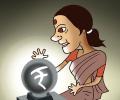
The Reserve Bank of India (RBI) has endorsed the introduction of a Merchant Discount Rate (MDR) on UPI transactions exceeding Rs 2,000, effective October 15. This move, which levies a 0.4 per cent fee on merchant payments above the threshold, aims to bolster the long-term sustainability and growth of India's digital payments ecosystem. The RBI clarified that person-to-person (P2P) transactions and small person-to-merchant (P2M) payments below Rs 2,000 will remain free for users, ensuring no direct charge on customers.

India face West Indies in the fourth T20I in Hyderabad, needing one more win to seal the series as Abhishek Sharma, Sanju Samson and Ishan Kishan lead the batting charge.

Fake web sites, counterfeit goods, bogus delivery charges and fraudulent customer support agents are common warning signs.

Indian benchmark indices Sensex and Nifty rebounded in early trade after two days of losses, driven by easing crude oil prices and strong buying in blue-chip IT stocks, despite continued global uncertainties. Track Sensex, Nifty on September 30.
Jio Platforms, the digital arm of Reliance Industries Ltd (RIL), is launching its initial public offering (IPO) with a price band of 1,065-1,119 a share, aiming to make RIL a net-debt-free company and create long-term shareholder value.

The Reserve Bank of India (RBI) net purchased a record $18.65 billion in July, driven by inflows from its concessional swap facility, leading to a significant increase in India's foreign exchange reserves.
